Systems: Week 8 — Econometrics
Alright — time for the first (real) newsletter! Thank you for being an early subscriber — it’s fun to know that these notes aren’t just for my eyes only, anymore!
Notes from this week
Site Work
I’ve been on a kick of site development recently — specifically around trying to get this site indexed by Google/Bing, with routine updates out to all the social media power that be. Part of getting everything straightened out, there, is data analytics — and once data’s being collected, you gotta worry about privacy. I think I’ve set everything up to be as non-intrusive and anonymous as possible, but if you’d like details, you can find those in the new Privacy Policy.
Additionally, a few things are going to be shifting around the site in the next few weeks as search engines get back to me with another batch of changes that need to happen to the site.
A Pattern Language
I finally got started on the initial annotations for A Pattern Language! This is part of a larger project around tying graph theory to urban development and exploration. Many of these early patterns are pretty heady and foundational, so the notes are longer than later ones will be — hopefully.
- APL: Pattern 0; Introduction
- APL: Pattern 1; Independent Regions
- APL: Pattern 3; City Country Fingers
- APL: Pattern 2; The Distribution of Towns
- APL: Pattern 4; Agricultural Valleys
- APL: Pattern 5; Lace of Country Streets
These have all been incredibly fun to work on. While it’s fairly straightforward to write software as a hobby, it’s slightly more difficult to do that with work around economics topics. This project has been a fun way to get back into it — A Pattern Language, at its core, is about how public policy can balance out a human tendency to slap down tall buildings wherever possible.
A lot of these early patterns are very abstract, talking about the distributions of populations and development. In an odd crossover, a lot of early figures known in computer science also made their mark on quantitative economics. You can find many of those crossovers in The Distribution of Towns — names like John von Neumann and Herbert A. Simon crop up because of their work in early econometrics research.
Some more interesting highlights:
- Americans’ Living Preferences:
| 1972 | 2001 | 2018 | 2020 | |
|---|---|---|---|---|
| City | 13 % | 23 % | 29 % | 27 % |
| Suburb | 13 | 29 | 31 | 25 |
| Small Town | 32 | 12 | 12 | 17 |
| Rural Area | 23 | 35 | 27 | 31 |
These results are pulled from a Gallup poll question that they’ve offered just a handful of times in the last 50 years, asking Americans where they’d prefer to live, if they could live anywhere. The 1972 entry is the one cited in City Country Fingers (03), but I was able to find a similar question’s results and tack them onto the initial table.
- Ecological Preservation:
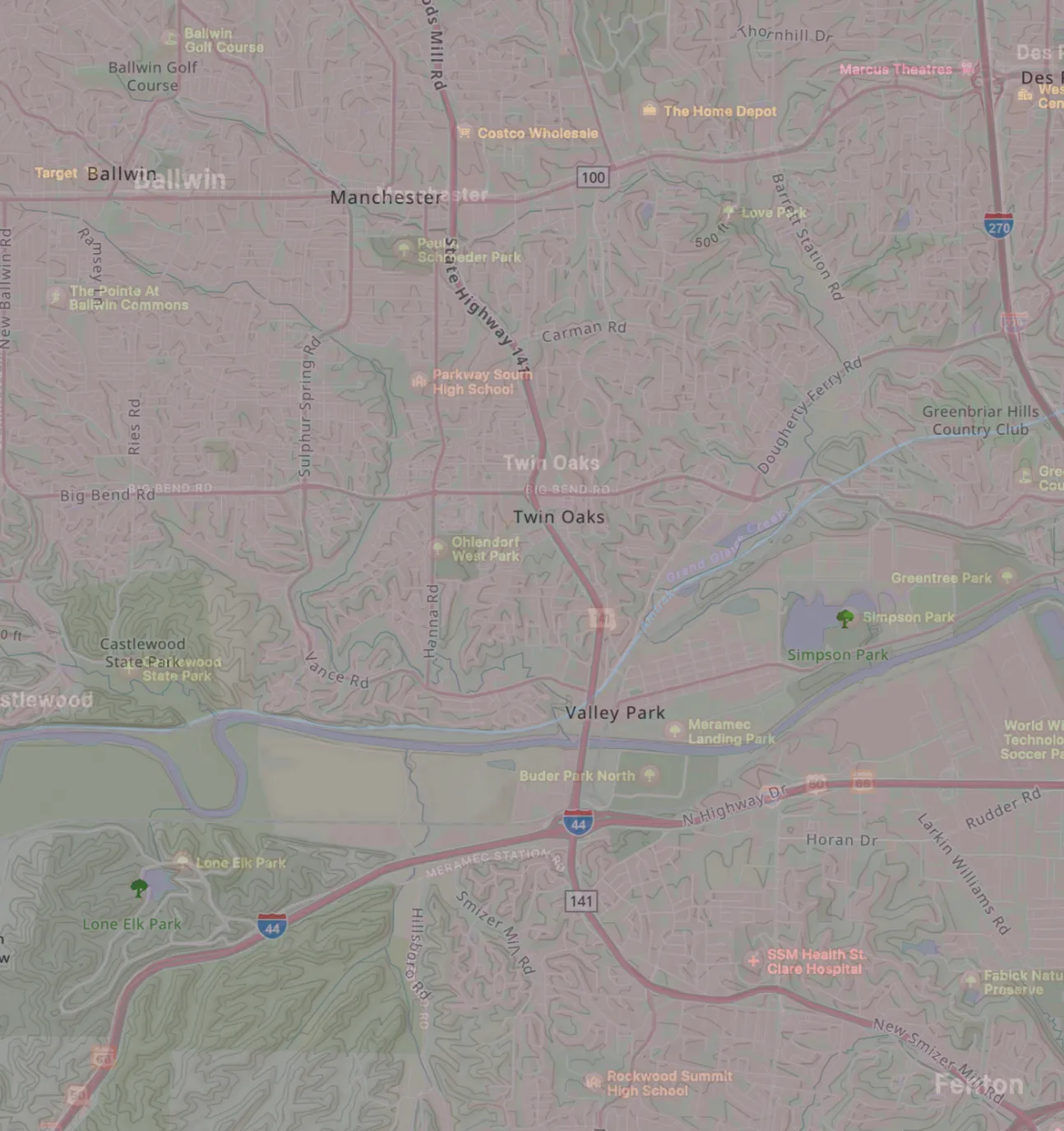
In Agricultural Valleys, the authors talk a bit about how low-laying land should be reserved for agricultural and ecological purposes. Any citizen of Salt Lake City can tell you how shitty it can be to live in a valley for ecological reasons — however, I wanted to compare some topological maps of areas I’ve lived as a comparison:
Topology: Manchester/Ballwin/Valley Park neighborhoods, St. Louis:
Topology: Salt Lake City Metro Area
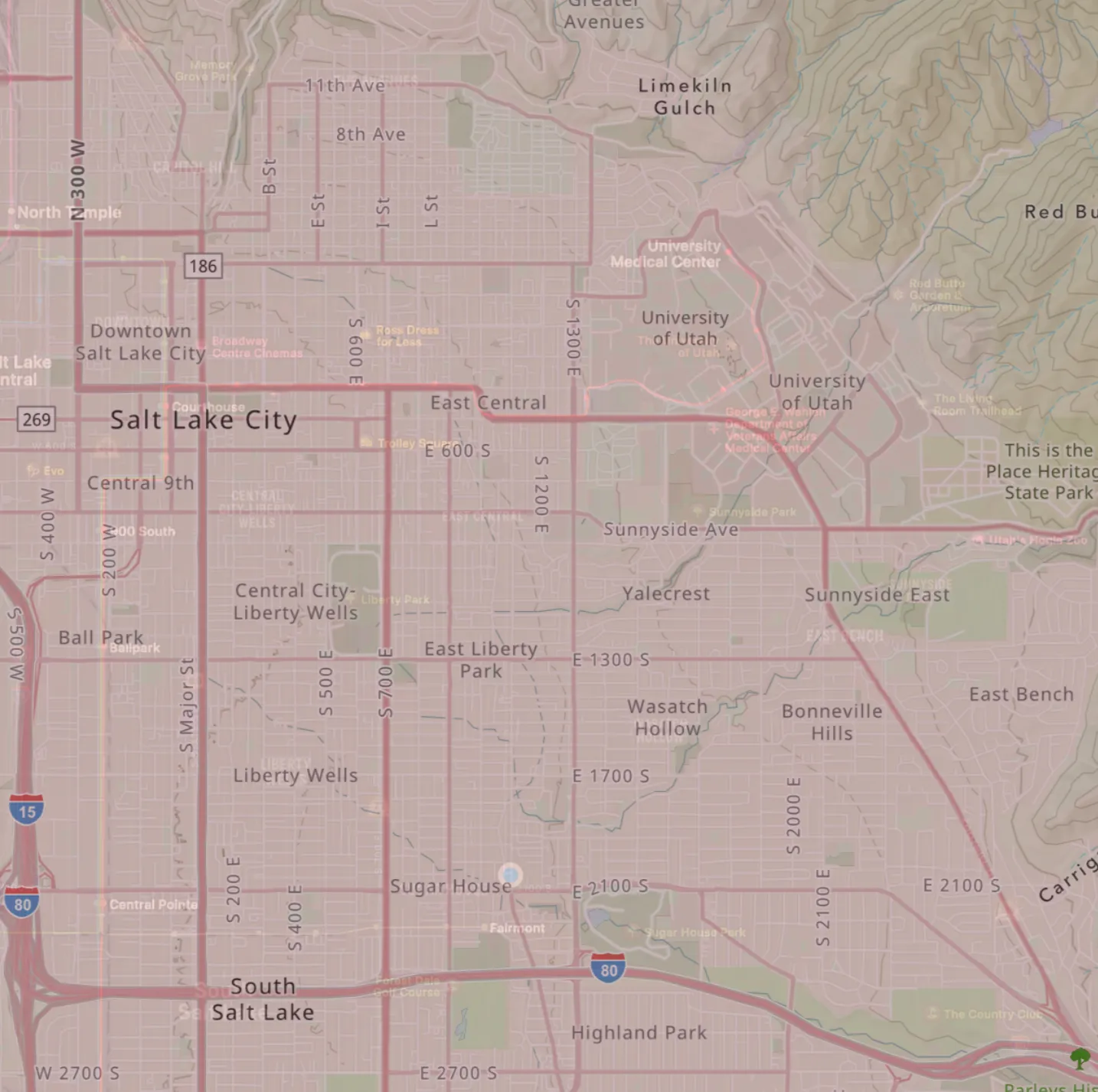
It was nice to have some validation of this pattern at work with the connection between City Country Fingers (03), Agricultural Valleys (04), and the relationship between natural development and the tributaries of the Meramec River in St. Louis.
Up Next
My hope, in the next week, is to cover some ground in an upcoming note about Markov Chains, an analytical tool for understanding messy graphs. Some of the early graphs and figures are already available, but I do need to actually write the note. It’ll be both a general stats/math post, but also tie into A Pattern Language once it’s done.
Thank you for subscribing! It means a lot to me that folks are interested in some of the weird overlaps between fields. Until next week!
— Spencer